Buying a condo in Lake View can look simple on the surface. You spot a great unit, like the finishes, and check the monthly assessment. But in a neighborhood with many older multifamily buildings, that monthly number often tells a much bigger story. If you want to compare condos with confidence, you need to look past the lobby and into amenities, reserves, and building questions that can affect your costs later. Let’s dive in.
Why Lake View condos need a closer look
Lake View is a strong example of why condo due diligence matters. According to CMAP, 49.4% of housing units are in buildings with 20 or more units, 35.3% were built before 1940, and the median year built is 1962. That means many buyers are choosing between buildings with aging shared systems, different maintenance histories, and very different approaches to budgeting.
The neighborhood also has a housing mix that leans condo-friendly. CMAP reports that 45.4% of homes are studios or one-bedrooms, and 32.7% are two-bedroom units. In practical terms, that gives you a lot of condo options, but it also means two similar-looking listings may come with very different building risks and monthly costs.
Assessments matter as much as price
When you buy a condo, the monthly assessment is part of your real housing cost. It is usually paid separately from your mortgage servicer, so it is important to include it in your total monthly payment. A lower purchase price can lose some of its appeal if the building carries a high monthly assessment.
Under the Illinois Condominium Property Act, boards must prepare a detailed annual budget and, for budgets adopted after July 1, 1990, provide reasonable reserves for capital expenditures and deferred maintenance. Illinois law also treats common expenses as including reserves. So when you review an assessment, you are not just asking what it costs today. You are asking what that payment is doing for the building over time.
What assessments often cover
Common expense assessments are recurring charges used to help operate, maintain, repair, replace, or improve common areas. Depending on the building, that may include:
- Building operations
- Maintenance of shared spaces
- Reserve contributions
- Elevator upkeep
- Boiler or mechanical servicing
- Exterior maintenance
- Parking area maintenance
- Insurance carried by the association
The exact mix varies by building. That is why one of the first questions to ask is simple: What does the monthly assessment include?
Amenities come with trade-offs
Amenities can make daily life easier, but they also affect your ongoing costs. In Lake View, where many condo buildings are older and multifamily, amenities are not just lifestyle perks. They can also signal more systems, more upkeep, and more future replacement needs.
In practical terms, a building with more amenities and shared systems often pushes more cost into the assessment line than a simpler building. That is not a rule for every condo, but it is a useful starting point. A doorman building with elevators, package handling, parking, and more common infrastructure usually has a different budget profile than a small walk-up.
Amenities worth comparing in Lake View
Because Lake View is highly transit-oriented, your best condo comparison points may not be the obvious ones. CMAP reports that 32.3% of commuters use transit, 40.4% of households have no vehicle, and the mean commute time is 34.1 minutes. That makes these items especially relevant when you compare buildings:
- Bike storage
- Private storage lockers
- Elevator access
- Package handling
- Guest parking
- On-site parking
- Laundry setup
- Entry and delivery access
For some buyers, parking is essential. For others, storage, bike space, or reliable elevator service may matter more. In Lake View, matching the building to your day-to-day habits is just as important as comparing finishes inside the unit.
Low assessments are not always a bargain
A low monthly assessment can feel like a win, especially if you are trying to manage your total payment. But in older condo buildings, a low number is not always a sign of efficiency. Sometimes it reflects a lean operation. Other times, it can point to deferred maintenance or weaker reserve funding.
That question matters a lot in Lake View because of the neighborhood’s building stock. Smaller courtyard or walk-up buildings may keep dues low, but buyers should still ask whether the building is saving enough for future work. In elevator buildings and larger associations, the central question is often whether today’s assessment is high enough to reduce the chance of surprise costs later.
The reserve fund question
Reserves are money set aside for capital expenditures and deferred maintenance. Under Illinois law, boards are supposed to consider repair and replacement cost, useful life, expected return on funds, any reserve study, the impact on owners and unit values, and the association’s ability to finance or refinance when deciding reserve levels.
For you as a buyer, the big takeaway is this: Is the monthly assessment funding current operations only, or is it also building reserves for future replacement work? That one question can change how you view the value of a condo.
How to think about special assessments
Special assessments get attention fast, and for good reason. They can add a major cost after closing. Still, a special assessment is not automatically a red flag.
Under Illinois law, special assessments can be used for emergencies or work required by law without unit-owner approval. If regular and special assessments together would exceed 115% of the prior year’s total, owners holding 20% of the votes can petition for a meeting, and the assessment or budget is ratified unless a majority of total votes cast reject it.
What does that mean for you? A special assessment should trigger a closer look. It may reflect a one-time major project, or it may suggest the building did not fully fund repairs through reserves.
What a special assessment can signal
Ask yourself and the association a few practical questions:
- Is this for a one-time repair or a broader pattern of deferred maintenance?
- Was the issue unexpected, or has it shown up in prior planning?
- Will the work reduce future risk, or is more major work still ahead?
- How has the board approached reserve funding in recent years?
The goal is not to avoid every building with a special assessment. The goal is to understand the story behind it.
Key documents Illinois buyers should request
For resale condos in Illinois, the seller must make available a set of important association documents. These include the declaration, bylaws, rules, a statement of liens and unpaid assessments, anticipated capital expenditures for the current or next two fiscal years, reserve fund status, the last available financial statement, pending suits or judgments, insurance coverage, and the association contact person.
The association must furnish that information within 10 business days of a written request. This is one of the most useful parts of condo due diligence because it gives you a clearer view of the building’s financial condition and planned work.
Documents that deserve extra attention
Beyond the standard resale package, a few items are especially helpful in Lake View:
- Board minutes from the preceding 7 years
- Any reserve study
- Recent financial statements
- Planned capital projects
- Insurance information
- Pending litigation information
Illinois law requires associations to keep minutes of association and board meetings for the preceding 7 years, and any reserve study is part of the association records members can inspect. These records can help you spot recurring repair issues, long-running debates over funding, or major projects that may affect ownership costs.
Smart questions for Lake View condo buyers
In Lake View, the best condo questions are often building-level questions, not unit-level ones. A beautifully updated kitchen does not tell you much about façade work, plumbing stacks, or reserve strength.
Here are some of the most useful questions to ask before you get too far into a deal:
Questions about money and planning
- What does the monthly assessment include?
- How much is currently held in reserves?
- Is there a reserve study?
- Was reserve funding ever waived?
- What capital projects are planned in the current or next two fiscal years?
- Have there been recent special assessments?
Questions about repairs and building systems
- What recent work was completed on the roof?
- Has the façade had major repair work?
- Have windows or balconies been repaired or replaced?
- What is the status of the elevators?
- Have boilers or major mechanical systems been updated?
- Have plumbing stacks been repaired or replaced?
- What work has been done on parking areas?
- Have fire and life-safety systems been updated?
These questions are especially relevant in Chicago high-rises because the city’s critical-examination language covers the exterior envelope and related exterior components, including roofs, exterior walls, windows, doors, balconies, fire escapes, chimneys, mechanical equipment, marquees, canopies, signs, flag poles, and exterior maintenance systems.
Use city records carefully
Chicago’s Building Permit and Inspection Records portal can be a helpful cross-check when you are reviewing a building. It may show permits or inspection history tied to the property. But it has limits.
The city warns that permits do not prove work was done, and the absence of alleged violations does not mean a building is compliant. So if you use city records, treat them as one data point, not the final answer.
Comparing courtyard, mid-rise, and high-rise condos
One of the smartest ways to shop in Lake View is to compare building types, not just unit finishes. Because the neighborhood has many older, larger buildings, maintenance risk and budget strategy can vary a lot by format.
Courtyard and walk-up buildings
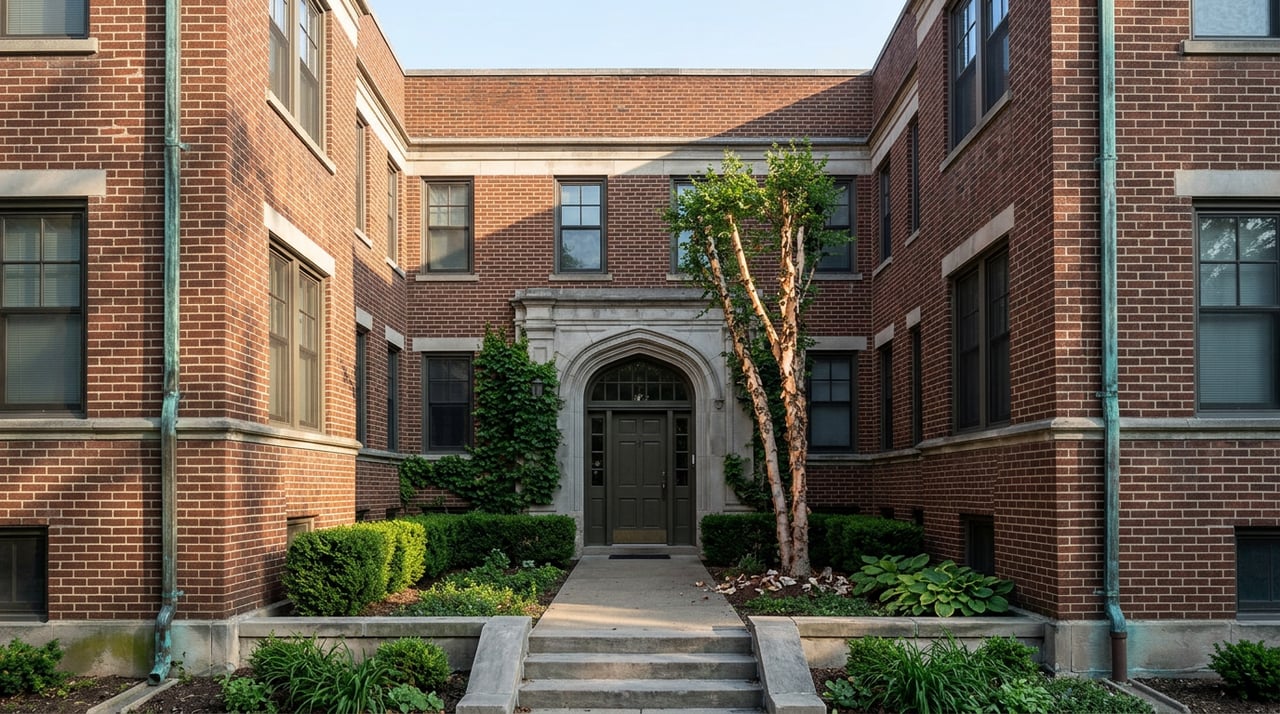
These buildings may offer lower assessments and a simpler amenity package. That can be appealing if you want to keep monthly costs down. But in many cases, you will want to look closely at exterior maintenance, roof history, masonry work, and whether the association has built meaningful reserves.
Mid-rise and high-rise buildings
These buildings often offer elevators, more shared systems, and sometimes more service-oriented amenities. That can improve convenience, but it also usually means more expensive maintenance and replacement items over time. In these buildings, a higher assessment may be easier to understand if the reserves, budgeting, and capital planning are strong.
The bottom line is simple: the best value is not always the condo with the lowest dues. It is the condo in the building that seems prepared.
Why this matters before you make an offer
A condo purchase is part home search and part building analysis. In Lake View, where older multifamily housing is common, that second piece matters a lot. The right questions can help you avoid surprises, compare listings more accurately, and decide whether a building’s monthly costs fit your budget and risk tolerance.
This is where a more analytical approach helps. Instead of treating the assessment as a side note, you can use it as a clue to how the building operates, what projects may be coming, and whether the condo really fits your goals.
If you want help evaluating a Lake View condo beyond the photos and headline price, John Charmelo can help you break down the numbers, the building questions, and the trade-offs so you can move forward with more clarity.
FAQs
What do condo assessments cover in a Lake View condo building?
- Condo assessments generally help pay for common expenses such as operations, maintenance, repairs, replacement of shared elements, and reserve contributions, but the exact coverage varies by building.
Why are condo reserves important when buying in Lake View?
- Reserves matter because they help fund future capital expenditures and deferred maintenance, which can affect the likelihood of future special assessments.
Are special assessments always a bad sign in Lake View condos?
- No. A special assessment is not automatically negative, but it should prompt a closer review of whether the cost is tied to a one-time project or a pattern of underfunded maintenance.
What condo documents should you review before buying in Illinois?
- For an Illinois condo resale, buyers should review items such as the declaration, bylaws, rules, unpaid assessment information, reserve fund status, planned capital expenditures, financial statements, insurance information, and pending litigation disclosures.
What building questions matter most for older Lake View condos?
- In older Lake View buildings, buyers should ask about the roof, façade, windows, balconies, elevators, boilers, plumbing stacks, parking areas, and fire and life-safety systems.
How should you compare amenities in Lake View condos?
- In Lake View, it helps to compare amenities based on how you actually live, including storage, bike parking, elevator access, package handling, guest parking, and the monthly cost tied to those features.